TryHackMe vs HackTheBox: Honest Comparison for 2026
Side-by-side analysis of the two biggest cybersecurity learning platforms — pricing, certifications, learning curves, and which one fits your goals.
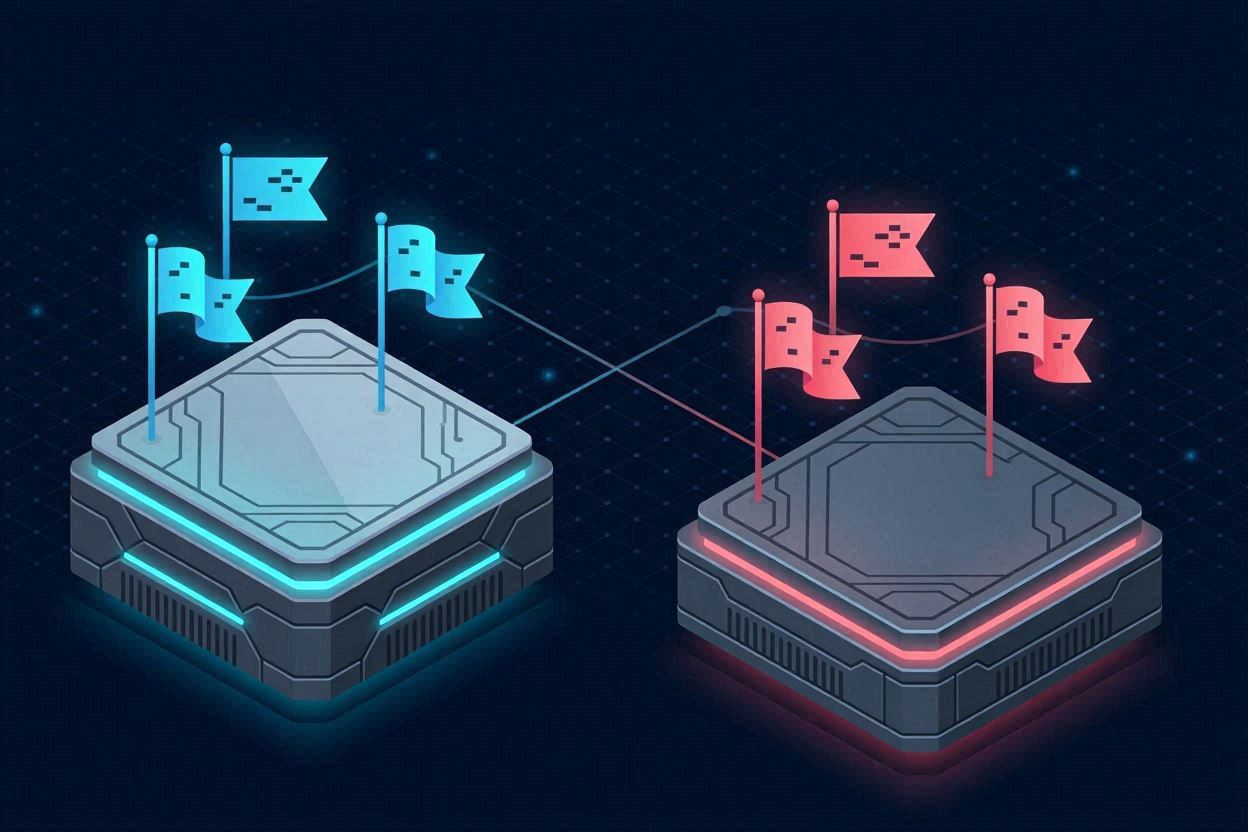
For most beginners in 2026, TryHackMe is the better starting platform — its guided learning paths and structured progression make the early curve manageable. HackTheBox wins for intermediate-to-advanced learners targeting offensive security or OSCP prep. Most successful candidates use both: TryHackMe first for fundamentals and SOC paths, HackTheBox once they're comfortable with the basics.
TryHackMe and HackTheBox are the two dominant cybersecurity learning platforms in 2026 — and the choice between them comes up in nearly every "how do I learn cybersecurity" thread on Reddit, Discord, and LinkedIn. The honest answer is that they're not direct competitors. They serve overlapping but distinct audiences with different teaching philosophies.
TryHackMe optimizes for the learning experience: structured paths, guided rooms, hint systems, and beginner-friendly explanations. HackTheBox optimizes for realism: less hand-holding, more authentic challenge, environments that resemble actual enterprise networks under attack.
This guide compares both platforms across nine dimensions — pricing, certifications, learning style, job market recognition, and more — and provides specific recommendations based on your background and goals. The goal isn't to crown a winner; it's to help you pick the right tool for where you actually are right now.
9 features compared
The essentials at a glance.
| Feature | TryHackMe | HackTheBox |
|---|---|---|
| Best for | Beginners, structured learning | Intermediate to advanced learners |
| Learning style | Guided rooms with hints | CTF-style, less hand-holding |
| Free tier | Limited rooms, 2 machines | Limited active machines, full retired with VIP |
| Paid plan | $14/mo Premium | $14/mo VIP, $20/mo VIP+ |
| Certification path | SAL1 (defensive), JPT (offensive) | CDSA (defensive), CPTS (offensive), CBBH |
| Difficulty curve | Gentle, beginner-friendly | Steep, expects baseline skill |
| Community | Discord, large beginner base | Forum, advanced practitioners |
| Real-world feel | Educational scenarios | Realistic enterprise environments |
| Job market recognition | Growing (especially SAL1) | Strong (especially CPTS, OSCP-comparable) |
TryHackMe
Founded 2018. Browser-based, structured learning paths, beginner-friendly.
TryHackMe organizes content into "rooms" (single-topic learning modules) and "paths" (curated sequences of rooms toward a specific goal). The platform's core innovation is the guided learning experience: rooms include explanations, write-ups, hints, and progressive question structures that walk learners through unfamiliar material.
The defensive content (SOC Level 1, SOC Level 2) is particularly strong and aligns with real SOC analyst job descriptions. The SAL1 certification, launched in 2025, validates this work with a hands-on exam that simulates SOC analyst alerts and investigations.
Pros
- +Best beginner experience in the industry
- +Structured paths with clear progression
- +Strong defensive (SOC) content
- +SAL1 certification adds resume value
- +Browser-based (works on Chromebook)
Cons
- −Less realistic than HackTheBox
- −Hint system can become a crutch
- −Offensive content less rigorous
- −Plateau after 6–12 months
- −Free tier increasingly limited
Pricing: Free tier available. Premium $14/mo (or $114/yr). VIP $20/mo. Free tier severely limited — Premium is realistically required for serious learning.
HackTheBox
Founded 2017. CTF-style machines, realistic environments, less hand-holding.
HackTheBox built its reputation on "active machines" — vulnerable virtual machines that mirror real enterprise systems. Users compromise these machines through reconnaissance, exploitation, privilege escalation, and lateral movement, with minimal guidance. The platform expects learners to figure things out, look up techniques, and develop systematic methodology.
HackTheBox Academy supplements this with structured courses, but the platform's identity remains the active machine experience. Certifications launched more recently (CPTS, CDSA, CBBH) and have rapidly gained recognition — particularly CPTS, which many practitioners consider OSCP-comparable at one-eighth the cost.
Pros
- +Most realistic learning environment
- +Strong OSCP preparation
- +CPTS certification highly respected
- +CDSA challenges SAL1 in defensive space
- +Better long-term learning ceiling
Cons
- −Steep learning curve for beginners
- −Minimal guidance can feel discouraging
- −Time investment per machine is high
- −Free tier rotates active machines
- −Defensive content less mature than offensive
Pricing: Free tier rotates 5 active machines. VIP $14/mo unlocks all retired machines. VIP+ $20/mo adds Pro Labs and dedicated lab access. HTB Academy modules sold separately or via VIP+.
Which platform for which goal?
Six common scenarios with specific recommendations.
Complete beginner with no IT background
TryHackMe's structured learning paths walk through prerequisites in order. Networking, Linux, web fundamentals — all covered before throwing you at a target. HackTheBox assumes you already know these.
Aspiring SOC analyst
TryHackMe's SOC Level 1 path is the strongest defensive learning track in 2026. SAL1 certification at the end provides resume validation. HackTheBox CDSA is competitive but assumes more upfront skill.
Aspiring penetration tester
Start TryHackMe for fundamentals (Junior Penetration Tester path), then transition to HackTheBox for realistic offensive work. Most successful pentesters use both — TryHackMe for learning, HackTheBox for sharpening.
Already comfortable with offensive basics
If you've already done OverTheWire, picoCTF, or basic pentest courses, HackTheBox active machines provide more realistic challenge. Less guidance, more like real engagement work.
Targeting OSCP
HackTheBox's machine difficulty curve and methodology align closely with OSCP exam style. The TJ Null OSCP-like list of HTB machines is the standard prep recommendation.
Limited time, want maximum efficiency
TryHackMe's room-based format works in 30-60 minute chunks. HackTheBox machines often require 4-8 hours of focused work. For people studying after work, TryHackMe wins on practicality.
TryHackMe vs HackTheBox certifications
Both platforms offer certifications. Which one validates more on a resume?
TryHackMe SAL1
DefensiveIncludes 3 months Premium + one retake. Strong defensive validation.
HackTheBox CDSA
Defensive100% practical. Strong reputation in SOC circles. Cheaper than SAL1.
TryHackMe Junior Penetration Tester
OffensiveNot a standalone cert. Excellent prep for eJPT or HTB CPTS.
HackTheBox CPTS
OffensiveConsidered OSCP-comparable by many. Strong job market recognition in 2026.
Most successful learners use both — but in sequence
The "TryHackMe vs HackTheBox" framing is misleading. The platforms are complementary, not competitive. Successful candidates typically follow this progression:
- TryHackMe Pre-Security and Cyber Security 101 paths (1–2 months)
- TryHackMe specialization path: SOC Level 1 OR Junior Penetration Tester (3–4 months)
- Earn relevant certification: SAL1 for defensive, eJPT/PJPT for offensive (2–3 months)
- Switch to HackTheBox for sharpening: machines, Pro Labs, or CPTS prep (ongoing)
Total timeline: 6–12 months on TryHackMe before HackTheBox becomes the right tool. Going to HackTheBox first as a beginner usually leads to frustration and abandonment. Staying on TryHackMe forever leads to a skill ceiling that doesn't translate to harder real-world challenges.
Frequently asked questions
Tap any question to expand.
01 Is TryHackMe or HackTheBox better for beginners?
Is TryHackMe or HackTheBox better for beginners?
02 Should I subscribe to both TryHackMe and HackTheBox?
Should I subscribe to both TryHackMe and HackTheBox?
03 Which platform's certification is more respected by employers?
Which platform's certification is more respected by employers?
04 Can I get a cybersecurity job with just TryHackMe or HackTheBox, no traditional certifications?
Can I get a cybersecurity job with just TryHackMe or HackTheBox, no traditional certifications?
05 How long does it take to complete TryHackMe SOC Level 1 path?
How long does it take to complete TryHackMe SOC Level 1 path?
06 Are TryHackMe and HackTheBox certifications worth the money?
Are TryHackMe and HackTheBox certifications worth the money?
07 Does HackTheBox or TryHackMe better prepare for OSCP?
Does HackTheBox or TryHackMe better prepare for OSCP?
08 Can I use TryHackMe and HackTheBox on a Mac or Chromebook?
Can I use TryHackMe and HackTheBox on a Mac or Chromebook?
The bottom line
Start with TryHackMe. The structured paths, beginner-friendly explanations, and SOC content map directly to entry-level career paths. The SAL1 certification provides resume validation that's increasingly recognized in 2026.
Add HackTheBox once you've outgrown TryHackMe. When TryHackMe rooms feel routine and you want realistic enterprise-style challenge, switch. CPTS certification at $210 delivers OSCP-comparable validation at a fraction of the cost.
For most people, neither platform alone is enough. The combination — TryHackMe for foundations, HackTheBox for refinement — is the most efficient path through the practical skill development that hiring managers actually evaluate in technical interviews.
Pick your starting certification
Compare every entry-level cybersecurity certification — including SAL1, CDSA, and CPTS in context.
Read the certifications guideRelated guides
Not sure which certification fits you?
Take our 2-minute quiz to get a personalized certification roadmap based on your goals, experience, and budget.
Get my certification roadmapRelated guides
Hand-picked next reads from CertCompass.
Free Cybersecurity Resources That Actually Work
Curated list of genuinely free training, labs, and certifications worth your time.
SAL1 Certification: Complete Guide
TryHackMe SAL1 deep-dive: format, cost, difficulty, and whether employers recognize it.
Best Cybersecurity Certifications for Beginners 2026
Honest comparison of 10 entry-level certs ranked by ROI, difficulty, and career fit.